
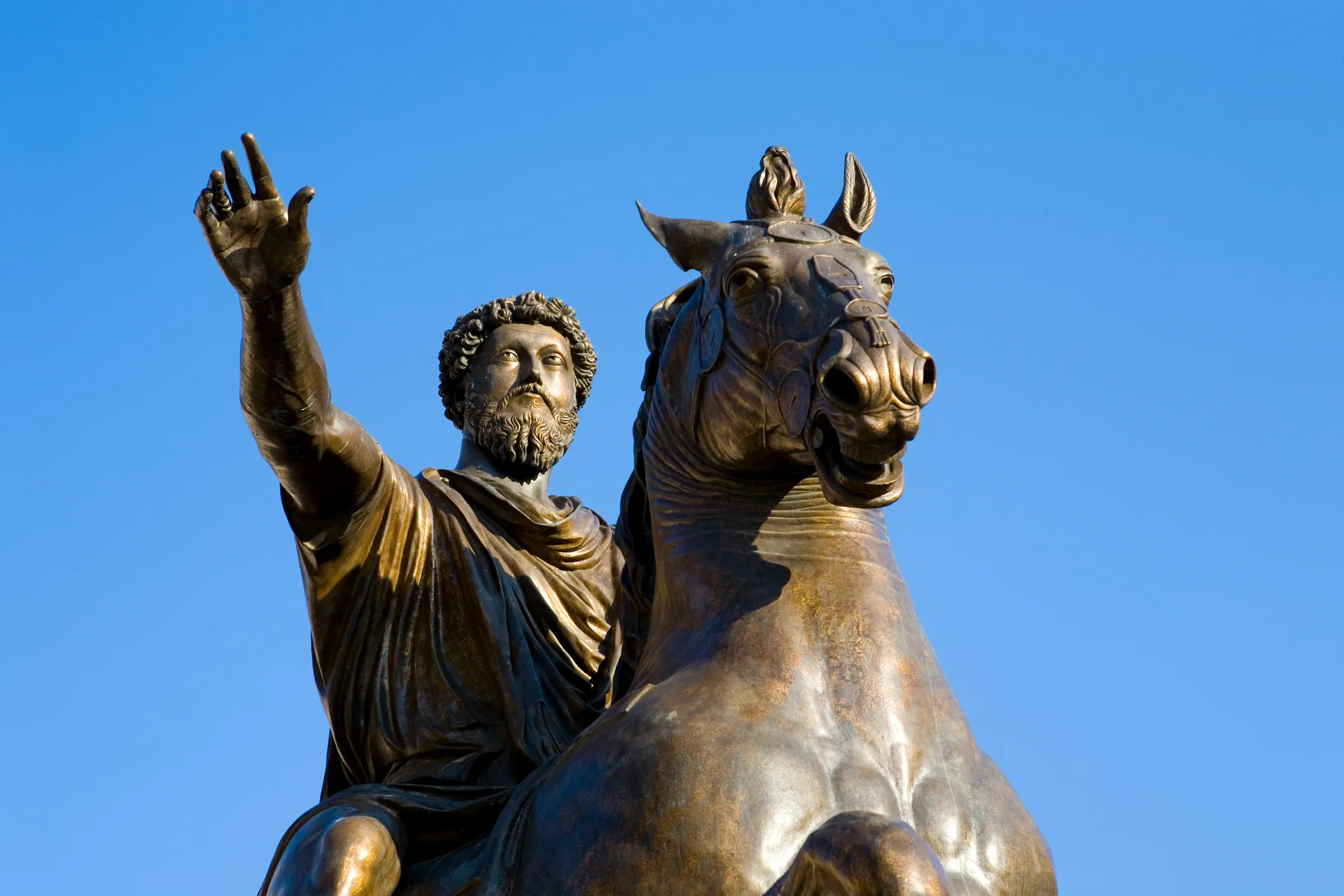

Marcus Aurelius, revered as the Philosopher-Emperor, stands as a remarkable figure who seamlessly combined the roles of a ruler and a thinker. His legacy in both governance and philosophy continues to inspire, making him a figure of enduring relevance, especially for those in demanding professions like aviation.
Life and Leadership
Born in 121 AD, Marcus Aurelius rose to the role of Roman Emperor in 161 AD. His reign marked a period often referred to as the “Golden Age” of the Roman Empire. Unlike many of his predecessors and successors, Marcus is remembered not only for his political and military achievements but also for his profound contributions to philosophy.
Philosophical Contributions and the Meditations
Marcus Aurelius is perhaps best known for his personal writings, compiled into what we now know as the Meditations. These notes, written during his military campaigns and personal reflections, offer deep insights into his philosophical mindset. Stoicism, a philosophy that originated in Ancient Greece and was later adopted by the Romans, teaches the development of self-control and fortitude as a means of overcoming destructive emotions. For Marcus, this philosophy was not just a theoretical framework but a practical guide to ruling justly and living a fulfilling life.
Cognitive Behavioural Therapy (CBT) is a widely recognised psychological approach that addresses patterns of thinking and behaviour to alleviate mental distress. Interestingly, many principles of CBT echo the philosophical themes explored by ancient thinkers like Marcus Aurelius. His writings, as reflected in his Meditations, emphasise the importance of focusing on what is within our control and reframing negative thoughts—core tenets of CBT. Today, therapists use CBT to help individuals challenge and change unhelpful beliefs and behaviours, fostering resilience and mental well-being. This alignment between ancient philosophy and modern psychology underscores the timeless relevance of these ideas, proving that the wisdom of past eras continues to inform and enhance contemporary therapeutic practices.
The Meditations reflect Marcus’s constant efforts to maintain equanimity, reminding himself to accept fate, focus on what is within his control, and act with justice and reason. These principles are particularly resonant for pilots, who must navigate both literal and metaphorical turbulence with calm and clarity.
Marcus Aurelius in Popular Culture: ‘Gladiator’
Many people’s first encounter with Marcus Aurelius may come from Ridley Scott’s 2000 epic film Gladiator. In the movie, Marcus Aurelius, portrayed by Richard Harris, is depicted as a wise and benevolent ruler who wishes to return Rome to a republic. While the film takes considerable artistic liberties with historical facts, it captures the essence of Marcus as a philosopher-king, torn between the demands of leadership and his personal philosophical ideals.

In Gladiator, Marcus Aurelius’s desire to pass power to the morally upstanding general Maximus, rather than his own corrupt son Commodus, underscores his commitment to virtues of wisdom and justice. Although this is a fictionalised account, it draws from real historical tensions and highlights Marcus’s lasting legacy as a symbol of moral integrity in governance.
Relevance for Modern Life and Aviation
Marcus Aurelius’s teachings continue to be relevant today, particularly for professionals who must manage stress and maintain focus. For pilots, understanding and applying these philosophical principles can be incredibly beneficial. The core practice of focusing on what one can control and accepting what one cannot is a powerful tool for maintaining mental health and resilience.
In our fast-paced world, Marcus’s reflections remind us to slow down and consider what truly matters. Journalling, a practice Marcus himself undertook, can be a valuable tool for pilots to process their experiences and maintain clarity and perspective. Keeping a journal helps in reflecting on one’s thoughts and actions, much like Marcus did, providing a way to cultivate a calm and resilient mindset.
Marcus Aurelius, through his life and writings, offers timeless wisdom on leading a virtuous and balanced life. His Meditations continue to inspire not only scholars and philosophers but also professionals across various fields, including aviation, medicine, leadership, psychology, and the military. In aviation, the emphasis on maintaining control and composure under pressure is particularly relevant. In medicine, his reflections on the transient nature of life and the importance of service resonate deeply with healthcare professionals. Leaders across industries draw from his example of wise and just governance, striving to emulate his balance of strength and compassion. In the military, his writings on discipline, duty, and resilience provide timeless guidance for soldiers and commanders alike. Additionally, in psychology, his philosophical themes, as previously mentioned, are echoed in modern therapies like Cognitive Behavioural Therapy (CBT), which helps individuals manage their thoughts and emotions effectively.
As we navigate our own challenges, the example of Marcus Aurelius serves as a guiding star, encouraging us to act with integrity, remain resilient, and focus on what truly lies within our control.
About Our Newsletter
Each Monday morning in your inbox, our aviation newsletters are designed to support and inspire pilots, both students and professionals, by providing valuable insights and technical content. We aim to promote positive mental health and build resilient individuals who balance life in and out of the cockpit. Through our content, we strive to create a community where aviators can thrive both personally and professionally.
Subscribe now to receive our insights in your inbox every Monday morning and stay ahead in your aviation journey.
For technical training, visit our online aviation theory courses at Pilot Life Training. Also, tune in to the Pilot Life Podcast for more discussions and insights.
Discover more: View all our articles on our new site, Perspectives!
Join the discussion