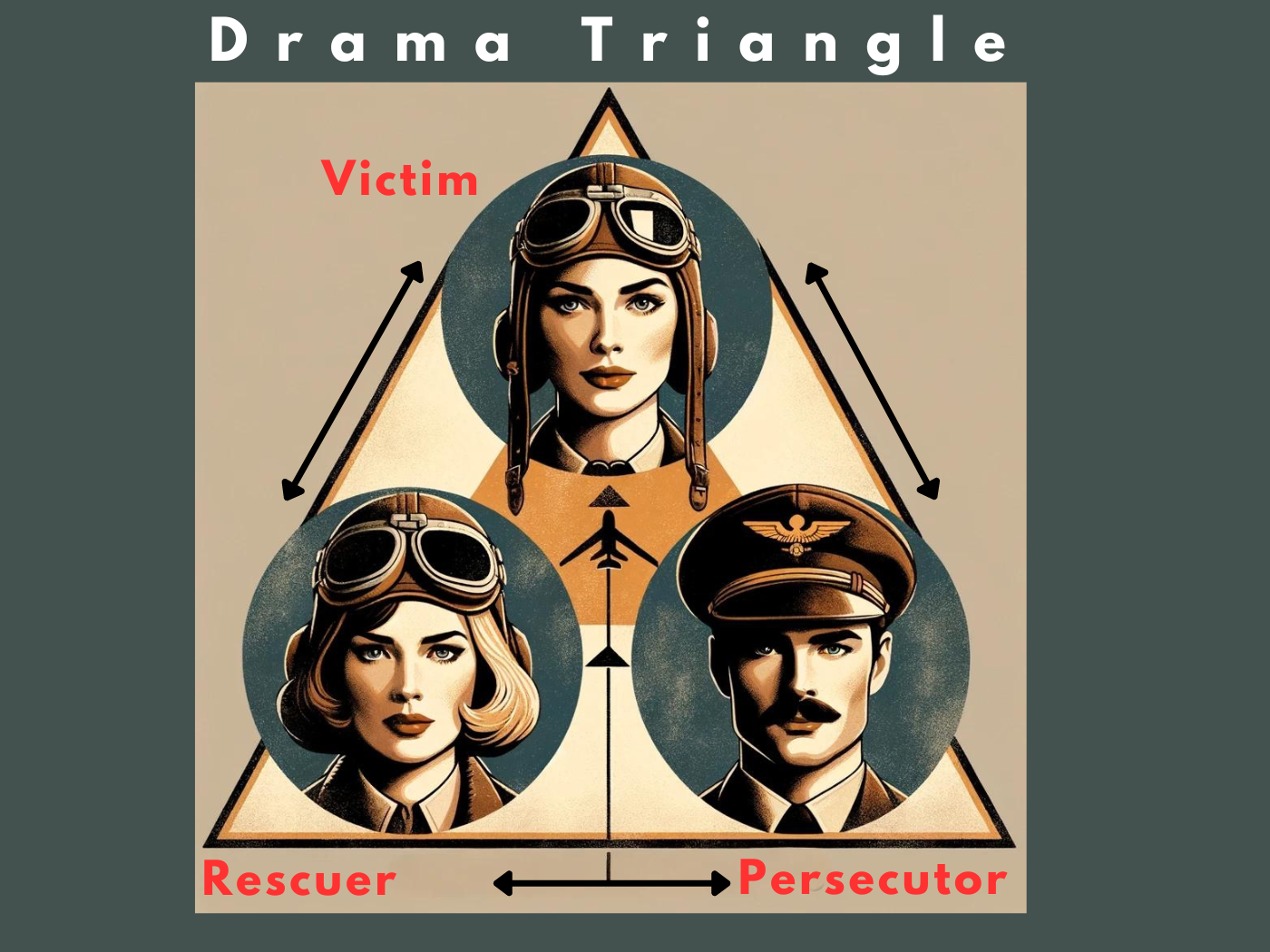

Stephen Karpman first introduced the Drama Triangle in the 1960s, a model that outlines three dysfunctional roles people can play in conflict: the Victim, the Rescuer, and the Persecutor. Understanding this dynamic is useful for pilots who aim to maintain effective communication and teamwork in the cockpit through Crew Resource Management (CRM).
In a dynamic environment like aviation, recognising and escaping the Drama Triangle can lead to more resilient and effective flight crews. Let’s explore how each role manifests and how adopting a proactive mindset can transform cockpit interactions and everyday life.
The Drama Triangle Roles
- Victim: This role is characterised by a sense of powerlessness and dependency. In the cockpit, a pilot who sees themselves as a victim may rely too heavily on others, fail to take initiative, or avoid responsibility. This can lead to a lack of confidence and an over-reliance on more experienced crew members, potentially compromising the safety and efficiency of the flight. Outside the cockpit, a victim mentality can result in missed opportunities and a lack of personal growth.
- Rescuer: While seemingly positive, the rescuer often overextends themselves, taking on more than necessary to save the victim. This can lead to burnout and can prevent the victim from learning to solve problems independently. In the context of CRM, a rescuer might constantly intervene in others’ tasks, undermining their autonomy and growth. In personal life, rescuers may neglect their own needs while trying to solve others’ problems, leading to stress and exhaustion.
- Persecutor: This role involves criticism and blame, which can create a hostile environment. A persecutor in the cockpit might undermine teamwork and erode trust among crew members. This behaviour can lead to a toxic atmosphere where open communication and mutual support are stifled. In everyday life, persecutors can damage relationships and create a negative environment at home or work.
If you haven’t already, signup for our weekly newsletter!
Transforming Roles Through CRM
Crew Resource Management aims to optimise interpersonal communication, leadership, and decision-making in the cockpit. By understanding and addressing the Drama Triangle, pilots can cultivate a more supportive and effective team dynamic.
- Empowering the “Victim”: Encourage self-reliance and proactive problem-solving. As Marcus Aurelius advised, “Take charge of your own rescue—if you have any regard for yourself—and do it without delay.” In the cockpit, this means fostering an environment where each crew member feels empowered to take initiative and act confidently within their role. This approach not only builds individual competence but also enhances overall crew performance. In everyday life, this translates to taking responsibility for one’s own happiness and well-being, setting goals, and taking actionable steps to achieve them.
- Supporting the “Rescuer”: Promote balanced support rather than overreach. Rescuers should be encouraged to provide guidance and assistance without taking over completely. This approach helps others develop their skills and reduces the risk of dependency. For example, during training sessions, instructors can focus on facilitating problem-solving rather than providing direct solutions, thereby encouraging learners to develop their own capabilities. In personal life, setting boundaries and encouraging others to take responsibility for their actions is essential for healthy relationships.
- Transforming the “Persecutor”: Shift from criticism to constructive feedback. Instead of blaming, crew members should focus on solutions and learning opportunities. This change fosters a positive atmosphere where everyone can contribute to continuous improvement. Constructive feedback helps identify areas for growth without demoralising team members, thereby maintaining morale and encouraging a culture of continuous improvement. In everyday interactions, practising empathy and understanding, and offering solutions rather than criticism, can greatly improve personal and professional relationships.
Practical Applications in CRM
To integrate these principles effectively, here are some practical applications in CRM and everyday life:
- Active Listening: Encourage all crew members to listen actively and respect each other’s input. This practice reduces misunderstandings and promotes mutual respect. Active listening involves paying full attention, acknowledging the speaker’s message, and responding thoughtfully. In personal interactions, active listening fosters deeper connections and understanding.
- Clear Communication: Ensure that all instructions and feedback are clear and concise. Ambiguity can lead to errors and increase stress. Use standard phraseology and check for understanding to confirm that messages have been correctly interpreted. Clear communication is also vital in personal relationships to avoid misunderstandings and conflicts.
- Role Clarification: Define and respect each team member’s responsibilities. When everyone understands their role, it reduces the likelihood of falling into the Drama Triangle. Clear role definitions help streamline operations and prevent overlap or confusion. In family or work settings, understanding and respecting each person’s role and responsibilities can enhance cooperation and harmony.
- Regular Debriefings: After each flight, hold debriefing sessions to discuss what went well and what could be improved. This is common practice when learning to fly. This practice allows for continuous learning and development. Debriefings should focus on objective analysis and encourage open dialogue about experiences and observations. In everyday life, reflecting on daily experiences and discussing them with loved ones can foster growth and stronger relationships.
- Promote a Culture of Accountability: Encourage crew members to take ownership of their actions and decisions. Accountability fosters a sense of responsibility and commitment to maintaining high standards of performance and safety. In personal life, being accountable for one’s actions builds trust and reliability in relationships.
- Encourage Peer Support: Peer support can help address issues before they escalate into Drama Triangle dynamics, promoting a more collaborative and cohesive team environment. In everyday life, building a network of supportive friends and family can provide emotional and practical support during challenging times.
Understanding the Drama Triangle and integrating its principles into CRM can significantly enhance teamwork and performance in the cockpit. By taking active responsibility for our roles and fostering a supportive environment, we can build more resilient and effective flight crews. Remember, as Marcus Aurelius wisely said,
“Take charge of your own rescue—if you have any regard for yourself—and do it without delay.”
This mindset not only benefits individual pilots but strengthens the entire team, leading to safer and more efficient flights.
Take a moment to reflect on your own behaviour both in the flight deck and in personal settings. Consider the roles you might be playing. Are you a Victim, a Rescuer, or a Persecutor? By recognising these roles, you can use the insights from the Drama Triangle to foster better relationships, both professionally and personally. Observing and understanding your interactions can lead to more effective teamwork in the cockpit and more harmonious connections in your personal life. Let’s strive to be more aware and proactive, creating a supportive environment wherever we are.
About Our Newsletter
Each Monday morning in your inbox, our aviation newsletters are designed to support and inspire pilots, both students and professionals, by providing valuable insights and technical content. We aim to promote positive mental health and build resilient individuals who balance life in and out of the cockpit. Through our content, we strive to create a community where aviators can thrive both personally and professionally.
Subscribe now to receive our insights in your inbox every Monday morning and stay ahead in your aviation journey.
For technical training, visit our online aviation theory courses at Pilot Life Training. Also, tune in to the Pilot Life Podcast for more discussions and insights.
Discover more: View all our articles on our new site, Perspectives!
Join the discussion